Strong is not
enough.
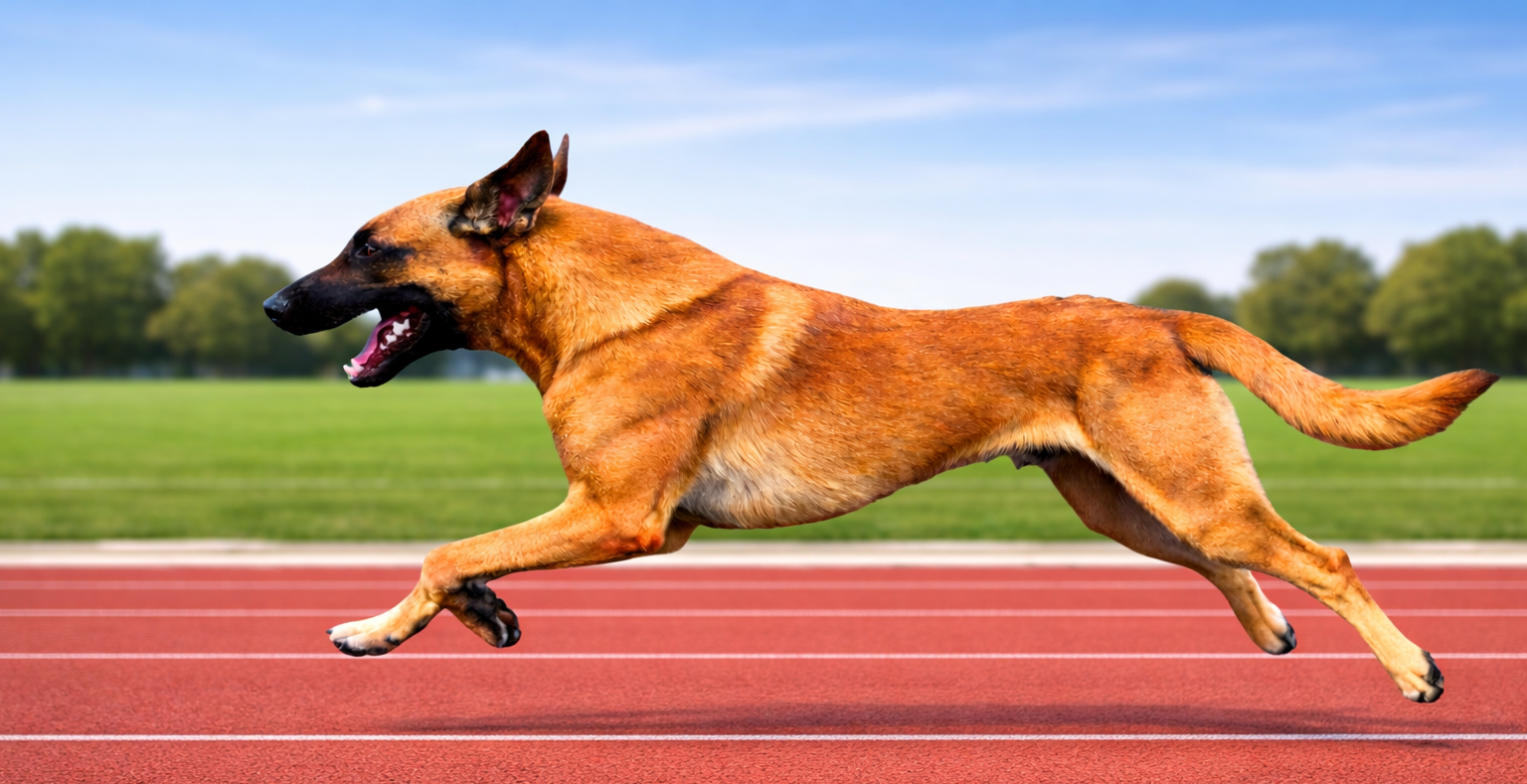
Sport and working dogs needs more than a collection of exercises off social media. They need conditioning that prepares their bodies for the demand of the specific demands.
Strengthening
✳︎
Balance
✳︎
Flexibility
✳︎
Proprioception
✳︎
Sport-specific exercises
✳︎
Strengthening ✳︎ Balance ✳︎ Flexibility ✳︎ Proprioception ✳︎ Sport-specific exercises ✳︎
Different dogs. Different demands.
For many pet dogs, conditioning starts with something surprisingly ordinary: using their bodies regularly, building strength, and moving comfortably through their available range of motion.
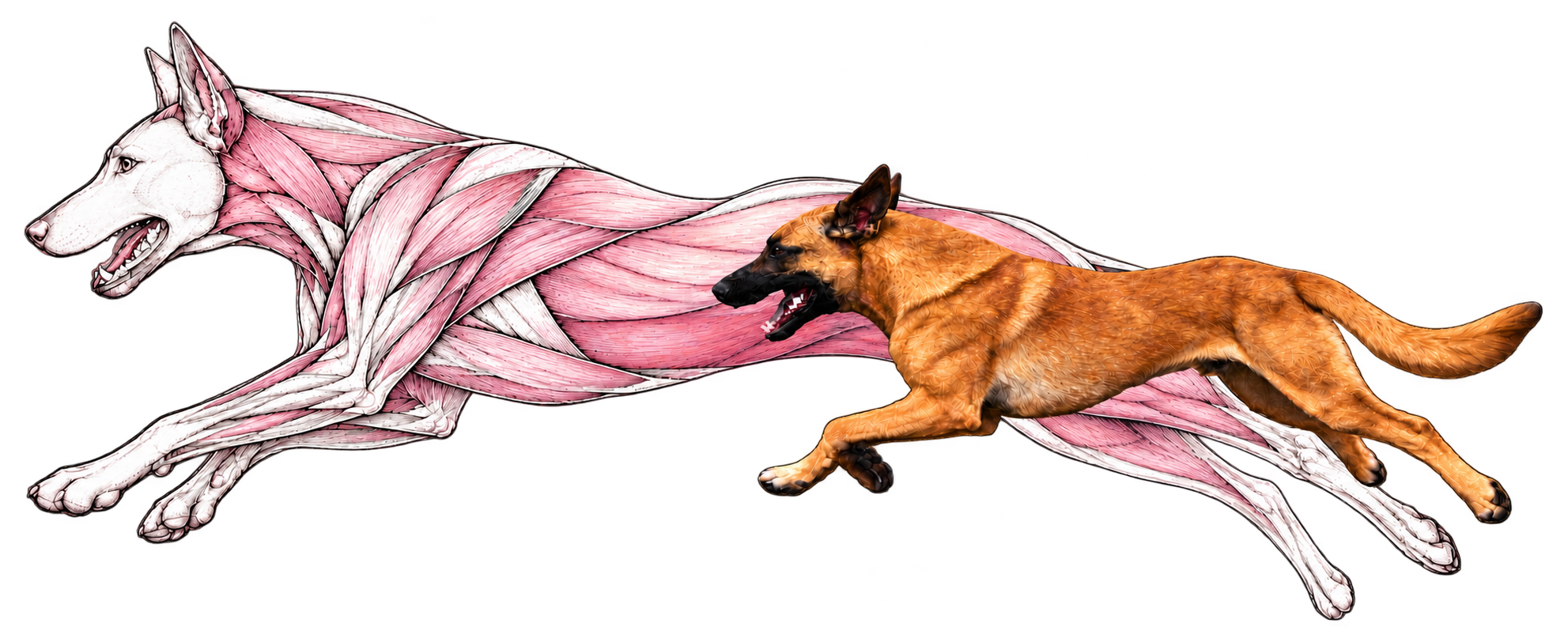
Sport and working dogs often arrive with plenty of strength already. They can sprint, jump, turn, pull, and launch themselves into situations that would make an orthopedic surgeon wince.
The interesting question is whether their muscles, tendons, and joints are prepared to handle those forces repeatedly.
A wobble board might have its place. But does it actually minimiz the risk of injury in YOUR dog?
Same anatomy.
Very different jobs.
Every sport and working role places different physical demands on the body. Conditioning should reflect those demands.
Agility
Rapid acceleration, braking, jumping, and turning. Shoulder structures, paws and digits, back, and iliopsoas are frequently represented in injury reports.
Protection & Patrol
Explosive acceleration, gripping, impact, and unpredictable changes in direction. Spinal, musculoskeletal, and traumatic injuries deserve attention.
Detection & Search
Prolonged searching, variable terrain, climbing, repeated changes in posture, and environmental hazards. Paw injuries and wounds are prominent in disaster-search studies.
Obedience & Utility
Repetitive positions, heeling, jumping, and specialized movement patterns. The conditioning plan should reflect the specific tasks and training volume.
Injury Risk in Perspective.
Published studies show a substantial injury burden across sports and working roles. The most frequently reported areas include the shoulder, paws, back, and iliopsoas/groin.
41.7%
Agility dogs
More than 4 in 10 sport dogs had experienced an injury that kept them out of the sport for over a week.
Markley et al., 2021
73.6%
Concurrent injuries
Almost 3 in 4 dogs diagnosed with an iliopsoas strain also had another musculoskeletal problem.
Canapp et al., 2023
35.6%
Working days lost
Musculoskeletal problems accounted for more than a third of all injury- and illness-related duty days lost in a study of military Special Operations dogs.
Harroun-White et al., 2024
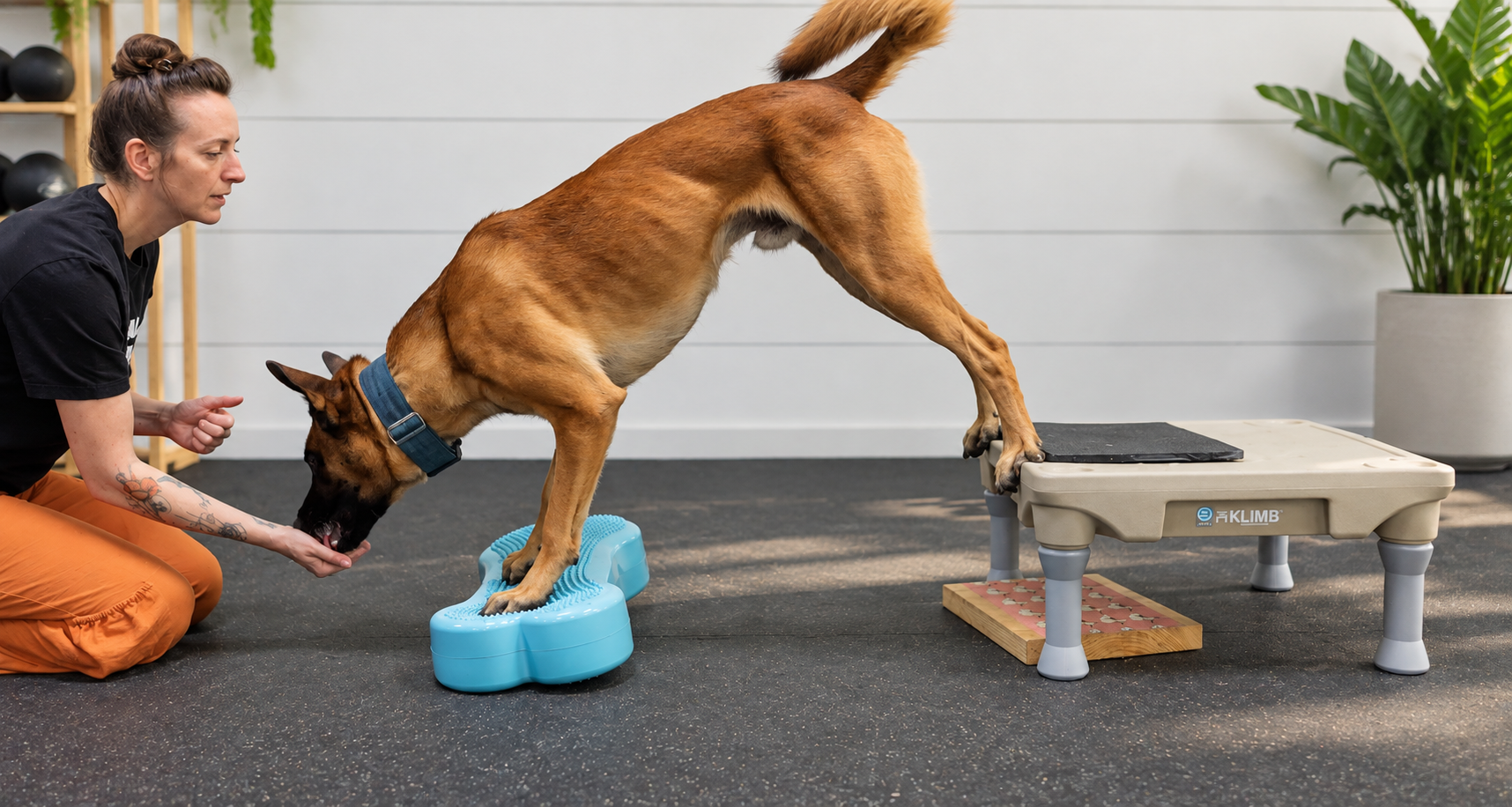
Got an injury? Rehab is the first step. The plan doesn't end there.
Laser therapy, PRP, underwater treadmill sessions, and other veterinary rehabilitation interventions have a place in recovery, depending on the injury.
But once a dog is cleared to begin conditioning, we have another job to do.
Rebuild strength. Restore movement control. Progressively load the tissues. And eventually prepare the dog for the forces, speeds, and repetitions their sport demands.
Real dogs. Real demands. Real plans.
Every dog brings a different training history, movement pattern, injury history, and set of physical demands.
I combine my background in biology, canine fitness, and working-dog training to develop individualized conditioning programs that make sense for the dog, the sport, and the job.
Sessions & Pricing
Initial Assessment & Report — $75
Before our first session, I assess your dog's posture, movement patterns, and physical condition and provide a report to guide the conditioning program.
In-Person Sessions — $100
Individualized, hands-on conditioning sessions focused on strength, movement quality, and sport-specific demands.
Virtual Sessions — $75
Personalized coaching and exercise progression from wherever you train.
Minimum commitment: 3 sessions
In-person package: $375 (assessment + 3 sessions)
Virtual package: $300 (assessment + 3 sessions)
BOOK A FREE CONSULTATION
In-person in Sonoma County, California, or virtually worldwide.